

Surrounded by one of the richest fishing waters in Europe, Ireland has long maintained a complicated relationship with seafood on its plate. Despite being an island nation, fish has often occupied a secondary role in our food culture, one relegated to Friday penance, greasy chipper counters or export markets, where it is more readily appreciated and celebrated than at home.
Our relationship with seafood has been adrift for decades, raising the question of why we have struggled to reframe fish as a quality indigenous product and a source of national pride. Fish in Irish culture is more than Donegal Catch and Leo Burdocks - though both have their time and place - and the seafood industry is more than Aran jumpers and risqué boat names. For too long, our aquatic expectations have been reduced to a narrow image. There was never an issue of quality, but more one of narrative: a failure to value, communicate, and ultimately believe in what our waters provide.
This narrative has been shaped as much by history as by habit. Colonial food systems, religious influence and the economics of export quietly trained Irish consumers to look past what was hauled in on our own shores. However, at Ómós, we want to challenge the assumptions and question the inherited logic behind this. The Irish maritime industry is one to be championed, not chastised. Be it the magical sheen of perfectly cooked mullet or the delicate beauty of smoked trout, our fruitful seafare is certainly one to be held aloft.
For generations, fish in Ireland was tied less to pleasure and more to penance. Catholic tradition dictated abstinence from meat on Fridays, committing what might now be considered a culinary sin. Fish was positioned not as an equal to meat, but as a substitute, both sub-par and second-grade. Soggy fish and chips became a staple of school canteens, while boiled, battered, or barely seasoned cuts of fish took over dining tables at the start of the weekend. Currachs and communion became entwined, and the reputation of fish sank to about the same depth as a monkfish’s chances of winning a beauty pageant. Yet that association has lingered. Seafood has long been perceived as functional and penitential rather than celebratory - something to be tolerated, avoided on menus, or drowned in sauce rather than understood on its own terms.
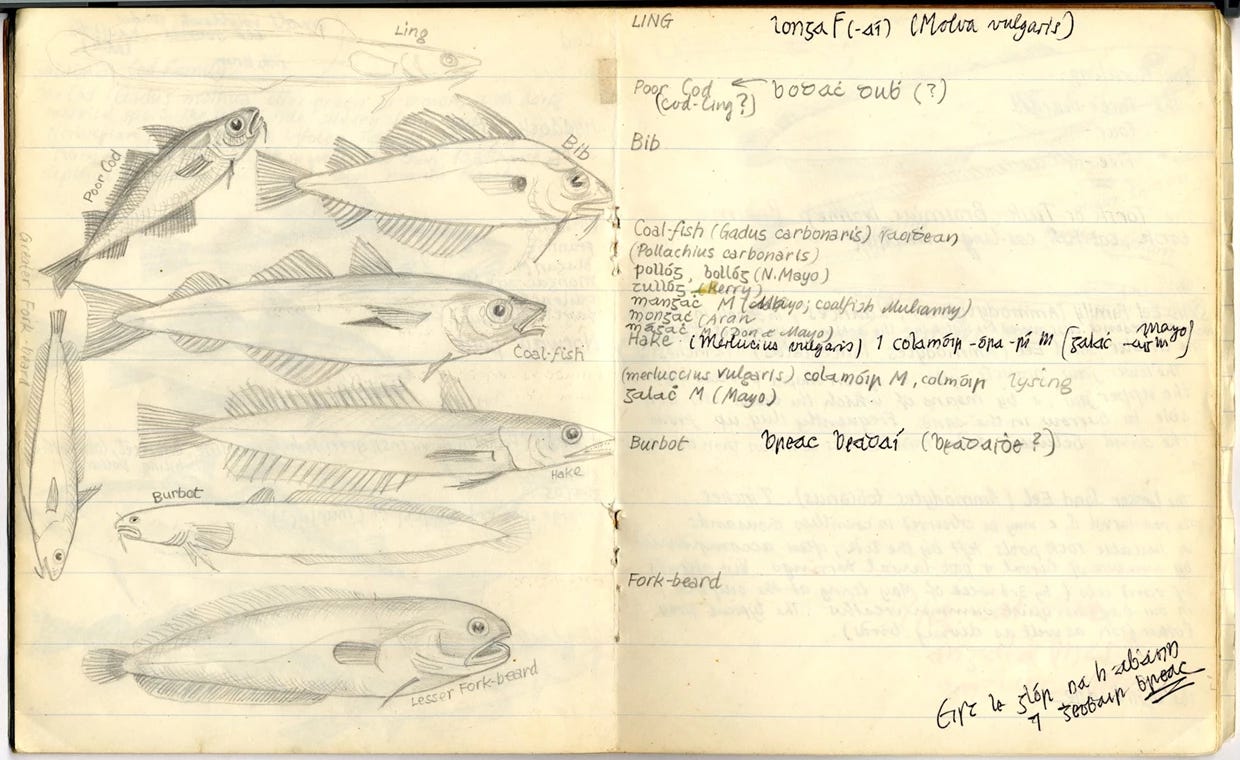
As a Catholic doctrine loosened its grip on Irish society, another force altogether began to shape our fishing industry. Ireland’s inclusion in the European Economic Community brought its long-term benefits but also complex quota systems and regulatory frameworks that often disadvantaged small, inshore fisheries. To paraphrase many a fisherman, we got our roads, but what about our waters? Productive Irish waters became plundering ports for European counterparts, thus reinforcing the long-established pattern in which our best seafood left our shores while domestic consumption stagnated.
Yet it’s not all doom and gloom. As they say, ‘sometimes you have to throw out the trout in search of the salmon’. Ireland’s relationship with fish doesn’t have to remain stuck in its old patterns. Take Denmark, a country with a maritime history as rich and layered as Ireland’s, and a place Cúán is more than familiar with, having spent time there learning his trade. Both nations have maritime climates that support abundant fishing ecosystems and small-scale coastal communities. Weather and sea conditions historically dictated seasonal fishing patterns, preservation methods and local cuisine. But here’s where we differ: walk into any restaurant in Denmark, small or large scale, fine or casual dining, and fish is celebrated, fresh and versatile.
Not only is fish viewed through a different cultural lens, but its journey to the restaurant is also a different one. Many restaurants employ fishermen directly, with menus dictated by tides and catches rather than customer preferences. Fishermen value maritime traditions and opt away from coastal dredging and intensive fishing methods that destroy ecosystems and the seabed. There seems to be a concerted effort to know your place in the food system and recognise a responsibility to contribute to a more sustainable use of resources. Be it methods such as traps, beam trawling, nets and bottom gillnets, low-impact and non-invasive methods are viewed not as groundbreaking but as the norm. Take their native Danish seining method. This is a practice that causes little to no environmental damage and is more fuel-efficient than bottom trawling. It uses a bag-shaped net attached to two long ropes that are laid in a wide semicircle to enclose an area of seabed. The ropes are then slowly hauled in, herding fish into the net without dragging it across the bottom. This is a practice rarely found in Irish waters.
The Danes are quick to recognise quality when they see it. It’s no surprise, then, that Irish producers are quietly making their way onto Danish menus. Up to 80% of Irish clams are exported, with many of them ending up on the plates of restaurants in Copenhagen or across the rest of Europe.
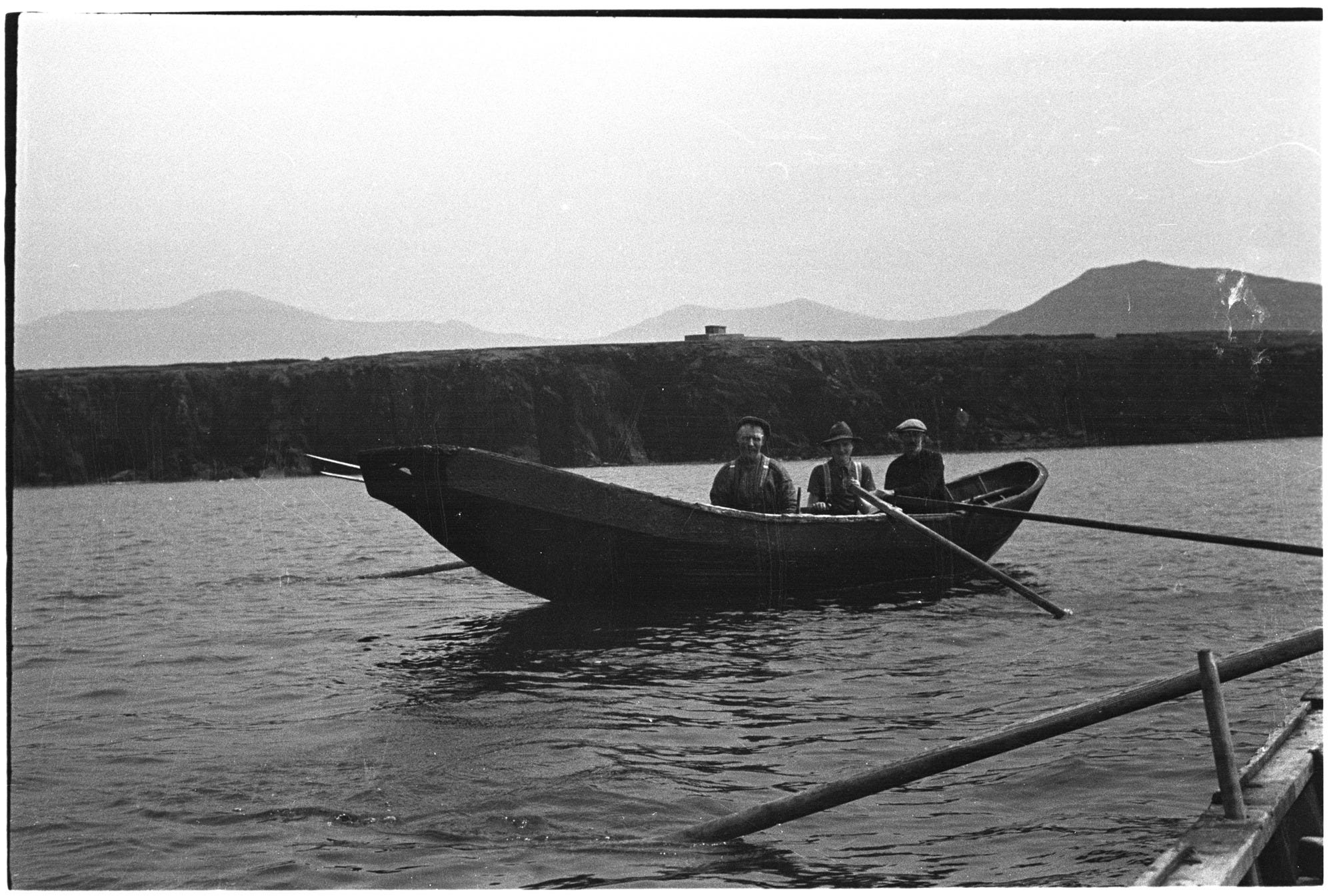
In an ironic turn of events, we might be all salmon and no knowledge. There is a quote from a Roald Dahl novel that springs to mind. The protagonist, a pelican nonetheless, utters: “I have heard of a fish-pie and a fish-cake and a fish-finger, but I have never heard of a fish-monger. Are these mongers good to eat?” This acts as a playful reminder that while we may be familiar with certain fish and fish dishes, we often remain disconnected from the full richness of marine life and those who bring it to our tables. Have you ever heard of Irish abalone or Connemara sea urchin? When was the last time you saw whelks or periwinkles on a menu? What about river trout or eel, herring, or even cockles? These species exist but remain largely invisible in contemporary Irish dining. And when we look closer, we do have our own champions of seafood, the custodians and producers who understand these waters intimately and are quietly working to restore both knowledge and respect for what they yield.
Take Sally Ferns-Barnes and Woodcock Smokery, the last remaining wild fish smoker in Ireland - a pioneering woman we have previously featured on the Digest. Then there’s Goatsbridge Trout, a three-generation enterprise committed to sustainable fishing practices that respect both the fish and the waters they are raised in, prioritising environmental care and long-term responsibility over short-term yield. Or consider Gannet Fishmongers, who deliver fresh, locally sourced seafood across the country, offering exciting catches such as Irish tuna and swordfish to adventurous homecooks and chefs alike. These custodians of Irish seafood are quietly reshaping the narrative, proving that the island’s waters still hold immense potential for those looking to seek it out.
All this talk of methods has us wondering what place fish might play on the menu at Ómós. Given Abbeyleix’s central inland location, how can we honour Ireland’s maritime life as well as her traditions? Preservation is the first idea that springs to mind and is something we are all excited to experiment with. From the cold smokers we hope to have on site, to salting, curing and fermenting techniques. Our minds are full of questions about how we can best put our dry agers to use and get the most out of our produce. As our musings move from ideas to menu designs, we hope for the humble sea to play her role in the theatre that is a meal. Maybe not as the leading protagonist, but with a quiet and essential presence. We aim to pay homage to the past, to the skills and restraint that once defined Irish food, while embracing the modern methods found in a diverse, contemporary Ireland. Who knows, you might even catch us in the River Nore in our waterproofs!
So, as this year draws to a close, and given that we’ve been reeling in the years, we might take the time to consider the abundance and natural strength of the Irish maritime community: the multitude of fish that surround our shores, the steadfast fishermen who embark, and the cooks who honour the produce by serving it thoughtfully. In this lull between Christmas and the New Year, there is an Irish seanfhocail that springs to mind, “Nuair a bhíonn an fharraige ciúin, bíonn na héisc ag éisteacht”, translating to “When the sea is calm, the fish are listening.” And to be honest, we are fairly certain the fish might even be laughing at us as we enter another year without fully tapping into the richness and breadth of our waters.
Written by Eoghan Conway.
Poem in Praise of Fish
Sydney Smith 1771-1845
Much do I love, at civic treat,
The monsters of the deep to eat;
To see the rosy salmon lying,
By smelts encircled, born for frying;
And from the china boat to pour,
On flaky cod, the flavour’d shower.
Thee, above all, I much regard,
Flatter than Longman’s flattest bard,
Much honour’d turbot! - sore grieve
Thee and thy dainty friends to leave.